Solana's Alpenglow Goes Live: 150ms Finality on Testnet
Alpenglow is live on Solana's public testnet, cutting finality from 12.8s to under 150ms. Q3 2026 mainnet target, and what changes for traders.
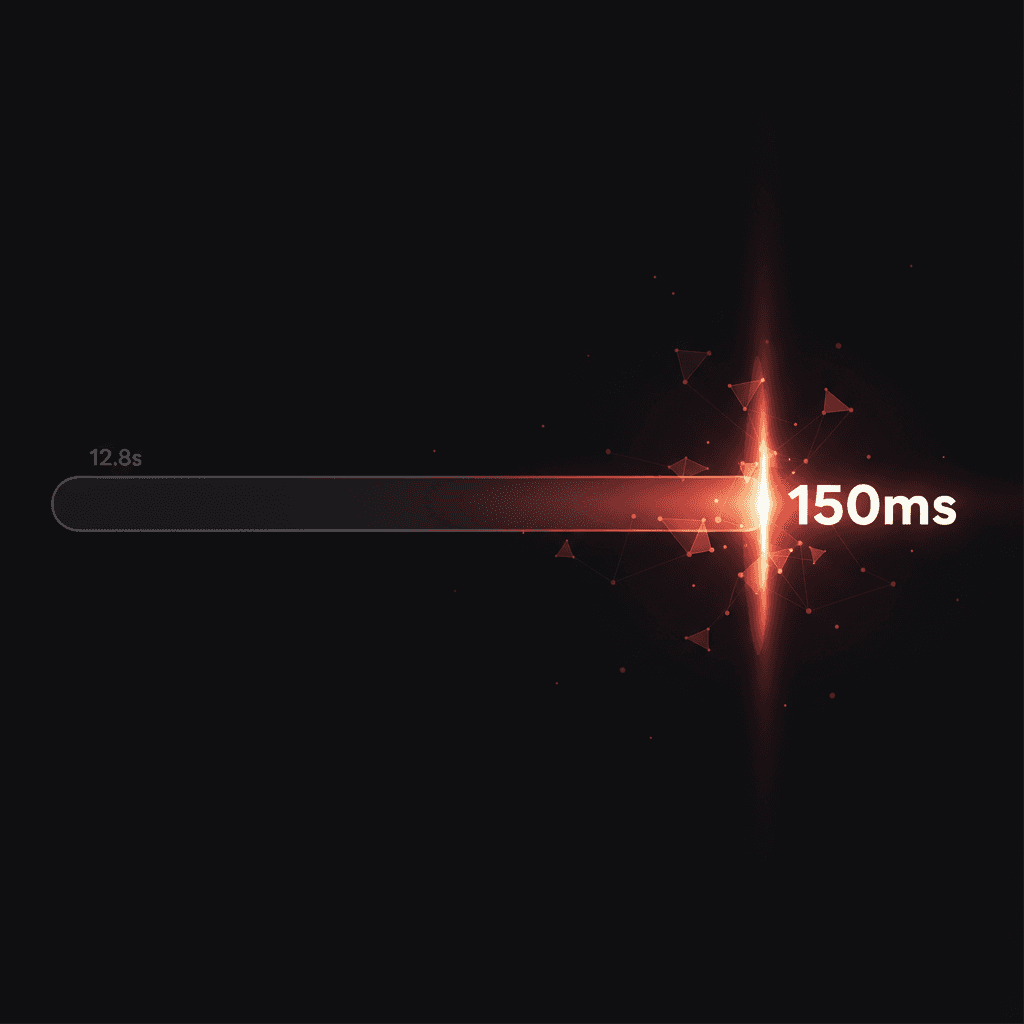
Solana's biggest consensus rewrite in five years just went live on a public testnet. As of May 11, 2026, Alpenglow is running on the community test cluster, and the headline number is the one traders will feel first: blocks finalize in 100 to 150 milliseconds instead of the 12.8 seconds the current pipeline takes for full economic finality. That is roughly a hundred-fold cut.
If the testnet holds up, mainnet is on the calendar for Q3 2026.
What actually changes when you click "Swap"
Right now, a Solana swap "lands" in about 400 to 800 milliseconds in the optimistic case. Your wallet shows the green check, the price card updates, you move on. But under the hood, the network is still grinding through Tower BFT votes to confirm the block can't be rolled back. Full finality, the point at which the trade is economically settled and no fork can reorganize it away, takes 12.8 seconds.
Under Alpenglow, that 12.8 seconds becomes 150 milliseconds at the outside. The wallet check and the economic settlement converge into the same moment.
For a normal user inside a swap UI, that means the post-trade UX gets honest. No more "confirmed" badge that is technically still in a window where the chain could reorg. For LP rebalancing during a fast move, it means the rebalance lands before the price runs away. For sniper bots and MEV-adjacent flows, the entire latency budget shifts down by an order of magnitude, which is going to redraw a lot of strategy tables.
Finality is the point at which a transaction cannot be reversed, even theoretically, by a chain reorganization. "Confirmed" and "finalized" are not the same thing on most chains, and the gap is where bad UX (and exploits) live.
Before and after, in one table
Metric | Today (Tower BFT + PoH) | With Alpenglow |
|---|---|---|
Optimistic confirmation | ~400-800 ms | ~100-150 ms |
Full economic finality | ~12.8 s | ~150 ms |
Block throughput lost to vote txs | ~50% | ~0% (votes off-chain) |
Per-validator vote fees | Thousands of dollars per year | Eliminated |
Mainnet target | Live now | Q3 2026 |

How Votor pulls this off
Alpenglow's voting protocol is called Votor, and it was designed by Anza, the Solana Labs spinout doing protocol R&D. The trick is moving validator votes off the chain itself.
Under Tower BFT, every validator broadcasts a vote transaction for each block, and those vote transactions sit inside blocks alongside actual user transactions. Estimates put that overhead at around half of the network's effective block throughput. Half the chain was the chain talking to itself.
Votor replaces that with direct peer-to-peer messaging between validators and signature aggregation. Blocks finalize in one round when 80% of stake votes the same way on first sight, or in two rounds at the 60% threshold. The on-chain block stays for state and user activity. Voting traffic moves off-chain and gets aggregated into a compact signature.
Two side effects matter for the ecosystem:
Validators stop paying for every vote. The per-validator bill for vote transactions ran into the thousands of dollars per year, which had quietly become a real operating cost for smaller operators.
Block space recovers. The throughput that Tower BFT was eating returns to user transactions, which compounds with the Firedancer rollout (now powering around 20% of validators) and the Frankendancer demo that hit one million TPS in a controlled environment.
If you run a sniper or volume bot, this is the upgrade to plan around. Latency-sensitive strategies that hedge against reorg risk by waiting through the 12.8-second finality window can be rewritten to act on first-round Votor finality once mainnet lands.
Governance and the path to mainnet
The Alpenglow upgrade was approved by a 98% validator stake vote in September 2025, which is about as clean a governance result as Solana has seen. From there, Anza shipped the testnet build, and as of May 11 it is running in production-realistic conditions on the community cluster.
The path forward looks like the usual Solana cadence: weeks of validator scale testing, a devnet promotion if numbers hold, then a mainnet activation slot. Q3 2026 is the stated target. Q3 in this context means roughly July through September.
Caveats worth knowing
One number is missing from the press coverage so far: what Alpenglow looks like at full mainnet validator scale. The test cluster is meaningful, but it is smaller than mainnet's roughly 1,500-validator set and runs without the messy real-world conditions of geographically distributed operators, packet loss, and adversarial latency.
Sub-150ms finality at testnet scale is one claim. Sub-150ms finality with 1,500 globally distributed validators under load is a different one, and the only place to settle that question is on mainnet. Expect the headline number to wobble in the first weeks after activation as the protocol meets real network conditions.
There is also the matter of client diversity. Alpenglow ships first inside the Agave client. Firedancer's adoption of the same consensus path will follow, and the two clients hitting interop on Votor is the milestone that will tell us the upgrade has actually landed across the network rather than just inside one team's codebase.

What J Tools users should expect
For now, nothing changes. Mainnet is still on the old pipeline. Once Alpenglow activates, swap confirms inside Solana universal swap tool will feel close to instant, LP rebalances land before the candle moves, and bot strategies built around the 12.8-second finality window get a new latency floor to work against.
The protocol shift is real. The user-facing speed claim is real. The "100x faster" number checks out at the testnet level. Whether it survives mainnet scale is the next chapter, and it is the one to watch.
For more launch and protocol coverage, see the Solana news category and the Solana tagged posts feed.
Alpenglow mainnet date: what we actually know
The stated mainnet target is Q3 2026, which in practice means somewhere in the July to September window. That date is a target, not a committed slot, and Solana upgrades have slipped before when validator testing turned up edge cases. The honest read is that the testnet build landed in mid-2026, the governance vote already passed with overwhelming stake support back in 2025, and the remaining work is scale testing rather than design.
What to watch instead of a calendar date: a devnet promotion is the next concrete milestone, and after that an activation slot gets scheduled on mainnet-beta. There is no single click that flips the whole network. Validators upgrade their clients, the feature gate activates at a chosen slot, and from that slot forward blocks finalize under Votor. If you want a real signal that mainnet is close, track when both the Agave client and Firedancer report Votor interop on devnet. That cross-client handshake is the gate, not a press release.
A protocol target date and an activation slot are different things. The target tells you roughly when; the activation slot is the exact block height where the new rules take effect for everyone at once.
12.8s vs 150ms: why the old number was so high
People searching this upgrade usually ask the same thing: how does finality drop from 12.8 seconds to 150 milliseconds without breaking anything? The short answer is that 12.8 seconds was never about raw network speed. It was the time the old Tower BFT pipeline needed to stack up enough vote confirmations that a rollback became economically impossible. Your swap already landed in well under a second; the 12.8 figure was the window in which, in theory, a deep fork could still reorganize it away.
Alpenglow collapses that window because Votor reaches the same no-reversal guarantee in one or two messaging rounds instead of dozens of on-chain vote slots. The settlement does not get faster by cutting corners on safety. It gets faster because the votes that prove safety stop traveling through blocks and start traveling directly between validators as aggregated signatures. The "confirmed" moment your wallet shows and the "finalized" moment the chain agrees on converge into roughly the same instant.
For a regular trader this mostly removes a quiet risk most people never think about. When you fire a Solana swap today, the green check appears before economic finality is locked in. The gap is small and almost never bites a retail user, but it is real, and it is exactly the seam that sophisticated reorg-aware strategies have exploited. Under Alpenglow that seam shrinks to almost nothing.
What Alpenglow means for memecoin traders and snipers
This is the part that redraws strategy tables. Anyone running latency-sensitive flows on Solana has built around the assumption that true finality is seconds away. Drop that to 150 milliseconds and several habits change.
- Sniper entries settle before the next candle. A buy that previously sat in a multi-second reorg window now finalizes inside a single human blink, which tightens the gap between "I clicked" and "this is mine and cannot be undone."
- Multi-wallet buys land closer together. If you spread an entry across many wallets to manage holder distribution, faster finality means the legs of that entry converge in time instead of straggling across the old confirmation window. A multi-wallet swap run benefits directly from a lower latency floor.
- Atomic bundles get a sharper edge. Strategies that already depend on tight ordering, like a same-block buy across a wallet set through bundled trades, sit on top of a network where the finality guarantee behind that ordering arrives almost immediately.
None of this is live on mainnet yet, so there is nothing to change in your workflow today. The point is to know what is coming. When activation lands, the strategies that currently hedge against the 12.8-second window have a new floor to design against, and the traders who understand that floor first will price it in first.
Faster finality does not make a bad trade good. It removes a timing risk; it does not remove slippage, liquidity, or the basic question of whether a token is worth buying. The current platform fee for any tool is always shown on that tool's own page before you sign.