BOUTYWORK: The Tattoo Typo the Internet Paid For
A Pump.fun GO bounty poster balked at paying over his own typo. The internet launched the BOUTYWORK token and routed its creator fees to Arivu, several times the disputed bounty.
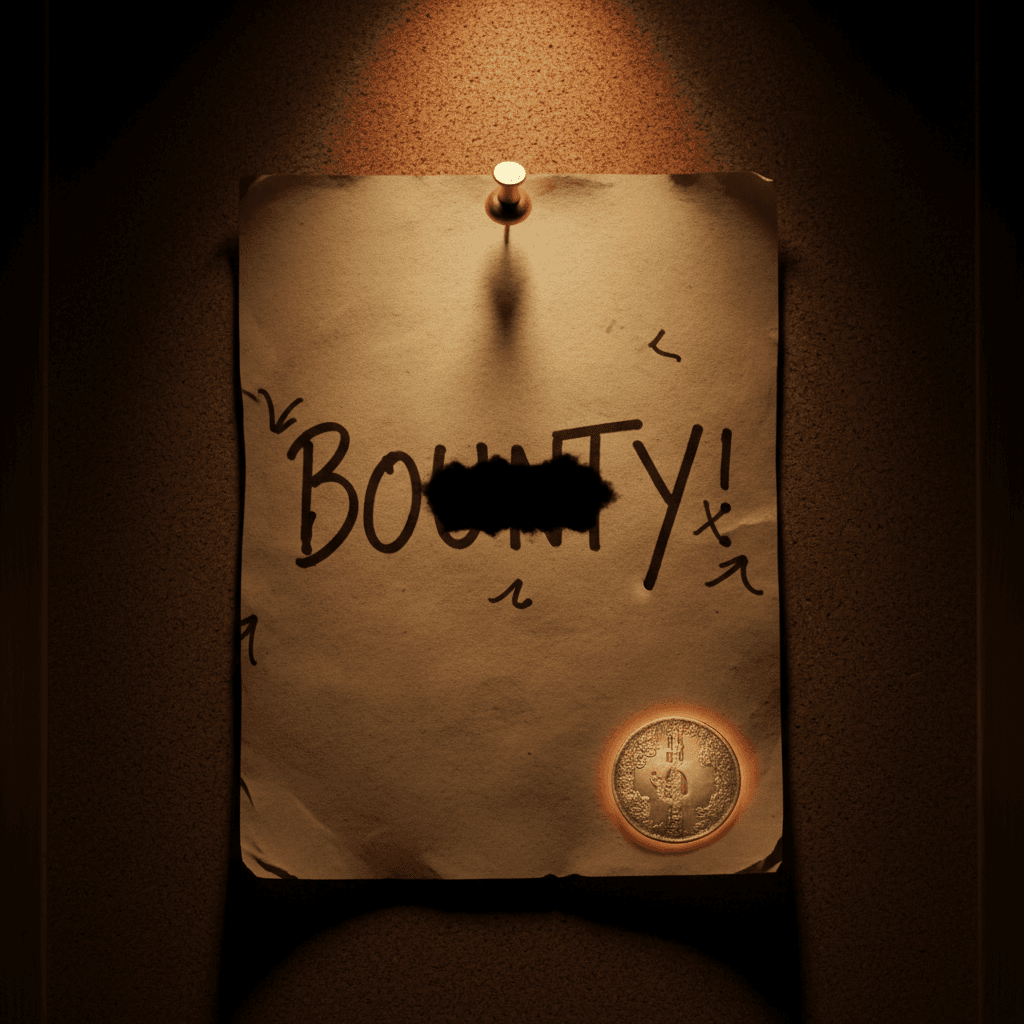
A man in Tamil Nadu, India, walked out of a tattoo session in early June with the word "$boutywork" written permanently on his forehead. His name is Arivu. A listing on a crypto platform had promised 40 SOL, about $2,630, to anyone willing to do exactly that and post video proof.
The poster refused to pay at first, because the word on his skin was missing a letter. The mistake belonged to the person who wrote the listing. The fallout has grown into one of the strangest internet-justice stories in years, and it has since put several times the bounty into Arivu's wallet.
Pump.fun GO and the 40 SOL bounty
Pump.fun is the busiest place on Solana for launching memecoins. A memecoin is a token built around a joke or a viral moment; its price runs on attention rather than any business behind it. On 4 June 2026 the platform opened a new service called GO, a public board where anyone can post a bounty. A bounty is an open job with a prize attached: describe a task and put up the reward; whoever completes it claims the money. SOL is Solana's own currency, the money these prizes are paid in.
There is no long application process for posting; you write the task and attach the prize, and because every listing is public, the absurd ones advertise themselves on social media. The pitch is blunt: "pay anyone to do anything." In its first week the board ran like internet dare culture wired to a crypto wallet: small prizes and light tasks, shared everywhere. If you want the full picture of how the board works, our full Pump.fun GO explainer covers it from zero.
Most GO listings are harmless dares. Sing a song, film a silly clip, eat something spicy on camera. The listing at the center of this story asked for more: tattoo the ticker "$boutywork" on your forehead and prove it on video, for 40 SOL. A ticker is the short code a token trades under, the crypto version of a stock symbol; the dollar sign in front is just how token names get written on social media.
For investors sitting on large crypto fortunes, $2,630 is pocket change. In much of the world it is months of income. That gap explains why the bounty found a taker, and it also feeds the uncomfortable side of everything that follows.
The tattoo said boutywork, and the payment never came
Arivu took the job. The tattoo artist copied the word from the listing exactly as it appeared, letter for letter. The video went up as proof. Then the listing's creator looked at it and refused to pay.
The stated reason: the tattoo says "boutywork". The creator's actual token was called "$bountywork", with an n. But the missing letter came from the listing itself, which spelled the word "boutywork". The creator wrote the mistake, published the mistake, and then rejected the one person who followed the published text precisely.
The argument quickly came down to a single question: is a task what its text says, or what its author meant to say? Anyone who has ever signed a contract knows the answer. The text is the task. Arivu had the video, the permanent proof on his forehead, and a counterparty refusing to recognize a word that counterparty had typed.
Arivu went public and asked for the payment. He carried a mark that will not wash off, and the amount he had received for it was zero. It is not hard to see why the anger spread as fast as it did.

The internet's answer: the BOUTYWORK token
The story spread fast, and the reaction arrived in the most crypto-native form possible. Traders launched a brand-new token called BOUTYWORK. The name was the point. They deliberately used the creator's own misspelling, turning the typo into a permanent reminder. On Solana, launching a token takes minutes; the Pump.fun token creation tool on j.tools runs on the same mechanic.
The token took off. Reports of its peak market cap range from about $373,000 within hours of launch (Unchained) to more than $600,000 (CoinDesk). Market cap is the token's price multiplied by the number of tokens in circulation; if a billion tokens trade at $0.0006 each, the market cap is $600,000. Treat it as a rough size measure rather than money sitting in an account.
Creator fees are the key mechanic here. On Pump.fun, a small cut of every trade builds up for the wallet registered as the token's creator, which claims it. Think of a street musician's hat, except here the trading itself drops the money in. The people behind BOUTYWORK pointed that wallet at Arivu, so every buy and sell added a tiny payment he could claim.
The tiny payments added up. Unchained put the creator fees routed to Arivu at roughly $15,000 on 8 June, already several times the disputed bounty. Arivu himself posted that he had received $20,000, and Gizmodo reported more than $40,000 by 10 June. The token page started behaving like a support campaign in disguise: as long as people kept trading, the flow toward Arivu kept running. Put the numbers side by side and the story does its own math.
| Item | Amount |
|---|---|
| The disputed bounty | 40 SOL (≈ $2,630) |
| BOUTYWORK peak market cap | About $373,000 to $600,000+ (reports differ) |
| Creator fees routed to Arivu | About $15,000 to $40,000+ (reports differ) |

What this story actually shows
Two readings, and both hold.
The first is uncomfortable. A board whose pitch is "pay anyone to do anything" will eventually host tasks with permanent stakes, and this episode showed there is no safety net when that happens. The creator refused to pay. On GO, Pump.fun reviews submissions and decides payouts, and in the first reports its moderators had not yet ruled on Arivu's video. The GO listing now shows the 40 SOL bounty as awarded and paid out to one winner; no public report we found says who that winner is. There was no published rulebook to point to.
Most GO listings are still light dares and may stay that way, but one badly written task was enough to show everyone where the rules stop. Pump.fun is facing scrutiny over exactly this kind of listing, and the scrutiny is fair. A dare that washes off in the shower is one thing. A forehead tattoo for $2,630 is another.
The second reading points the other way. A crowd of strangers moved real money to one specific person within days, with no fundraising page and no middleman taking a cut. They used a memecoin's own plumbing: launch a token, point its trading fees at the man who got stiffed, and let volume do the rest.
The intent was clear too; the crowd paid the creator's debt, and they made sure all of it bypassed his own token. Whatever you think of memecoins, that is a direct payment rail that did not exist a few years ago.
One more note. Arivu is no one's punchline in this story. From start to finish, he is the only party who kept his word.
If you go near viral tokens
Here is the cold part. Most people who bought BOUTYWORK near its peak lost money. Viral story tokens inflate within hours and deflate the moment the story cools. A concrete example: a token that peaks at $600,000 and settles at $60,000 three days later costs a late buyer nine tenths of their money, and with viral tokens that slide is close to the standard script.
The fees reaching Arivu are real, and they say nothing about the chart of someone who bought near the top. Timing works against you too. By the time a story reaches your feed, the chart has usually seen its peak already. A screenshot of a graph shows the past, never the future.
This article is not investment advice. Viral story tokens rise fast and fall just as fast; never put in money you cannot afford to lose.
If you still want to look at a token like this, look prepared. The snapshot tool that shows who holds what tells you whether a handful of wallets controls most of the supply; if they do, the exit door is narrow. Keep your main wallet out of it entirely; the burner wallet generator for risky experiments gives you a clean throwaway wallet in seconds. And if you do trade, the one-click token swap tool handles both the buy and the sell. Treat those three steps as the minimum hygiene for any viral token experiment.
For more stories like this one, the rest of our news coverage and all our Solana-tagged posts are the place to start; both keep growing as new stories land.
The tattoo stays, the token probably will not
The writing on Arivu's forehead is permanent. The BOUTYWORK chart almost certainly is not; that is how viral tokens end. What stays on the record is simpler: a bounty creator balked at paying for his own mistake, and the internet paid Arivu several times over anyway. Anyone posting a task for strangers should assume it will be read exactly as written. Arivu read it that way, down to the letter.
How Pump.fun GO creator fees actually work
The part of this story that keeps paying Arivu is the creator fee, and it works the same way for every token on the platform. When a token launches on Pump.fun, one wallet is recorded on-chain as the creator. From then on, every buy and every sell sets aside a creator fee for that wallet. The rate is not one fixed number; Pump.fun's fees are tiered (Pump.fun's fee page lists them). The fees collect in a creator vault until the creator claims them, which the Pump.fun creator fee claim tool does in one step. Nobody has to approve that claim.
That is why a token can act like a tip jar that fills on its own. The BOUTYWORK crowd did not run a fundraiser; they pointed the creator wallet at Arivu and let order flow do the rest, so each trade added a little to the fees waiting for him to claim. Two things stay true everywhere. Creator fees scale with trading volume, so they dry up the instant a viral token cools, usually within days.
And the fee is a cut of trades, never a slice of market cap, so a large peak valuation does not mean that much money actually changed hands. To see the mechanic from the launch side, the same creator-wallet setup runs when you launch a Pump.fun token yourself, and the platform fee shown on that tool page is separate from Pump.fun's own creator fee.
What is Pump.fun GO, and how it differs from Pump.fun
Classic Pump.fun is a token launchpad: you name a coin, attach an image, and it goes live on a bonding curve anyone can trade. The pricing behind that curve is laid out in how the Pump.fun bonding curve works. GO is a different surface on the same brand. Instead of launching coins, GO is a bounty board where you post a task, lock a SOL reward, and whoever proves they completed it claims the prize. The launchpad pays you for trading volume; GO pays you for doing a thing.
The difference that matters is settlement. A launchpad token builds up creator fees through code that cannot say no, while a GO payout depends on Pump.fun's review of your proof. That single gap, human judgment versus code, is why the bounty sat in dispute while the token kept paying Arivu. Our full Pump.fun GO explainer walks through the board from the ground up.
How creator-fee bounties get exploited, and how to spot it
The same plumbing that paid Arivu can be aimed the other way. A common pattern: someone hypes a "community pays the victim" token, registers the creator wallet to themselves instead of the named beneficiary, then farms the trading fees while the crowd thinks the money is going somewhere noble. The story is the bait; the creator-fee wallet is the catch.
You can check the claim instead of trusting it. Pull the holder list before you buy and read it like a risk sheet. If a handful of wallets sit on most of the supply, the exit door is narrow and one sell can collapse the chart.
Use the holder snapshot tool to see the distribution and the largest holders in one pass, then ask the obvious question: is the creator wallet really the person the story names, or just an anonymous address collecting fees? That question is one of the eight rug pull checks worth running on Solana.
A viral story does not verify the wallet behind it. Before sending money toward any "we are paying the victim" token, confirm where the creator fees actually land. The narrative is easy to fake; the on-chain destination is not. A block explorer like Solscan shows every transfer an address has received.
Pump.fun GO bounty FAQ
How much was the BOUTYWORK bounty?
The original GO listing offered roughly 40 SOL for tattooing the ticker on a forehead with video proof. The creator refused at first to pay over a typo in their own listing. The GO listing now shows the bounty as awarded and paid out to one winner, though no public report we found says who. Meanwhile the community-launched BOUTYWORK token routed creator fees to Arivu, many times more than the bounty.
Can you really earn creator fees on Pump.fun?
Yes. A small cut of every trade builds up for whichever wallet is recorded as a token's creator, and that wallet claims it from its creator vault. What that does not promise is profit for buyers; the fee flow says nothing about whether the chart goes up or down for whoever bought in.
Is Pump.fun GO safe?
The board works, but the payout rests on Pump.fun's review of each submission, with no published rulebook or appeal path. Treat any GO task with permanent or physical stakes as high risk, and never count on the reward until it lands in your wallet.