Solana LP Token: Burn vs Lock vs Hold for Launchers
Burn, lock, or hold your Solana LP tokens? A mechanical breakdown of all three paths and a decision matrix by project type.

You just opened a pool. You put in your token and some SOL, the price formed, the first buys came through. A new token landed in your wallet: the LP token. The first question in your community Telegram is always the same one: "What are you going to do with the LP?" This post walks a launcher through the three options (LP token burn vs lock vs hold), says how each one reads on the holder side, and shows which project type tends to regret which call.
What an LP token actually is, plainly
It's a receipt for the money you put into the pool. Think of leaving a coat at a restaurant coat-check. They hand you a paper ticket. Lose the ticket, lose the coat. Hand the ticket to someone else, they walk out with your coat. An LP token works exactly that way: the right to pull your SOL and tokens back out of the pool sits with whoever holds the receipt.
You have three classic options. Throw the receipt away forever (burn), put it in a time-locked safe (lock), or keep it in your pocket and decide later (hold). Each one sends a very different message to the people watching your wallet.

Burn: throw the receipt away forever
Burning means sending the LP token to an address that nobody owns. There's no private key for that address, no one can ever sign for it, the token gets stuck there permanently. The money in the pool keeps working (trades still go through, fees still accrue), but the withdrawal door is welded shut. For you, for the team, for anyone.
The holder side reads this as the strongest possible trust signal. "The team can't rugpull the pool because the pull button is gone." For memecoins this is the loudest move you can make, and the cheapest. Your only cost is the network fee, no third-party service required, no ongoing commitment.
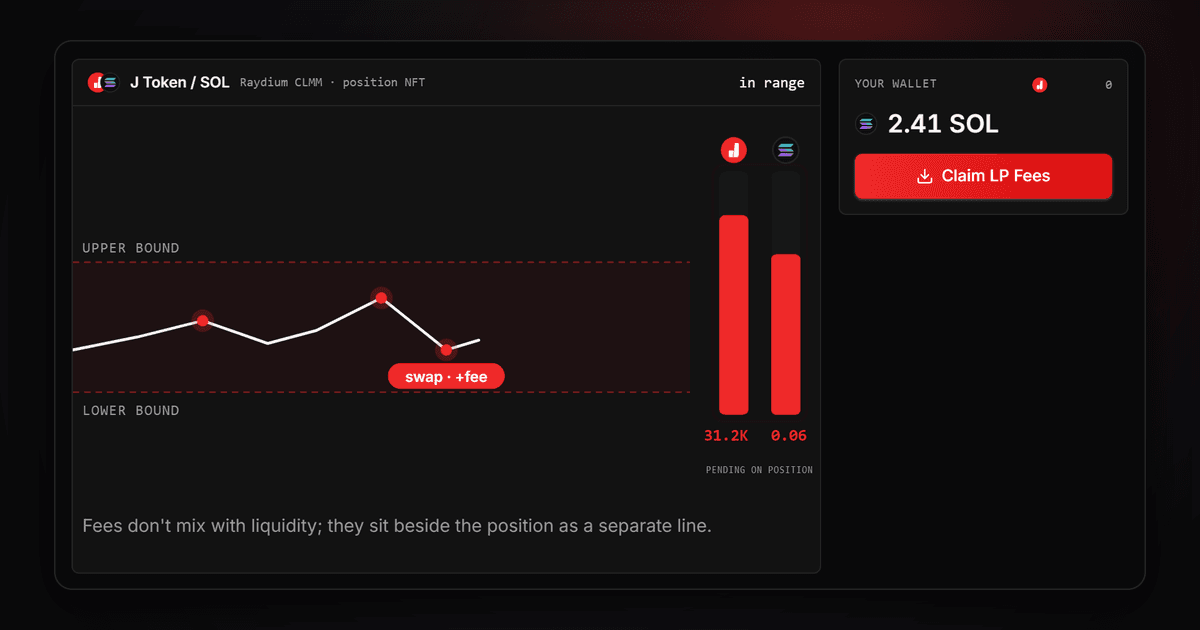
Two things are gone for good after you burn. First, the swap fees that normally accrue to pool shareholders still get earned on your burnt portion, but no one can ever claim them. They sit in the pool forever as dead value. Second, you can't migrate the liquidity to another DEX six months later. If the project takes off and you want to move from Raydium to a newer venue, you can't. The pool you launched is the only pool that token will ever have.
Swap fees on the burnt LP share sit locked in the pool forever, with no one able to claim them. For a token with a real roadmap, burning the LP also burns your own future fee income channel. Price that into the decision honestly before you sign.
Lock: put the receipt in a safe with a timer
Locking means depositing your LP token in a vault with a release date. A service like Streamflow or Jupiter Lock sets up the vault for you. You pick the release date, you transfer the receipt in, the vault closes. Until that date hits, nobody can touch what's inside (not even you). When the date comes, the original wallet can withdraw the receipt and choose what to do next.
The cost is real but small. The service fee typically runs around 0.1 to 0.5 SOL, paid once at setup, no ongoing fee for the duration. In exchange you get a proof artifact: an on-chain record that anyone can read on a block explorer like Solscan. Saying "we locked for 12 months" carries little weight on its own. Saying "we locked for 12 months, here's the link" carries real weight.
Two practical notes. Most lock services let you extend the lock but never shorten it, so commit deliberately. Pick the date with a clear head because you can't walk it back. Second, "1 month lock" theater fools nobody. The community reads it as a toy and the signal value goes negative. If you're going to lock, do at least 6 months, typically 12.
After the lock is created, paste the Solscan URL of the lock receipt into your launch announcement body, your docs page, and your pinned tweet. A clickable proof does the work that a paragraph of words can't.
Hold: keep the receipt in your pocket
Holding means the LP token stays in your wallet. The withdrawal right stays with you, and you can move the liquidity around as conditions change. This is the standard operational mode for professional market makers. Stablecoin issuers always hold their LP because rebalancing the pool is literally their job.
For a memecoin, holders read this as a red flag. "It's in their wallet, they can pull it anytime." For utility projects in active development, the only way to soften that read is to set up a multisig. You use a service like Squads to create a 2-of-3 or 3-of-5 signature account. You publish who the signers are (founder, advisor, team member) in the appropriate places. No single signer can move the LP alone, a majority has to agree.
The core message: "single-wallet hold" doesn't really count as hold. A key leak or a panicked solo signer drains the pool in one transaction. If you mean to hold, you mean to hold in a multisig. An LP sitting in one wallet is also one of the first things buyers look at in a Solana rug pull check.
LP token burn vs lock vs hold: which project picks which path
| Project type | Recommended path | Reasoning |
|---|---|---|
| Memecoin (no roadmap) | Burn on day one | No active development means flexibility carries no value, the trust signal is everything |
| Utility token, 0-6 months | 6-12 month lock | Buys community trust while keeping migration or re-lock open after the unlock |
| Utility token, 12+ months mature | Multisig hold or 24-36 month lock | Sophisticated holders understand active management, flexibility has real value here |
| Stablecoin / institutional LP | Permanent multisig hold | Rebalancing is the entire job, withdrawal authority is the entire requirement |
| RWA / regulated token LP | Permanent multisig hold | Regulation usually forbids burning, court-order responsiveness is a baseline obligation |
The Pump.fun exception
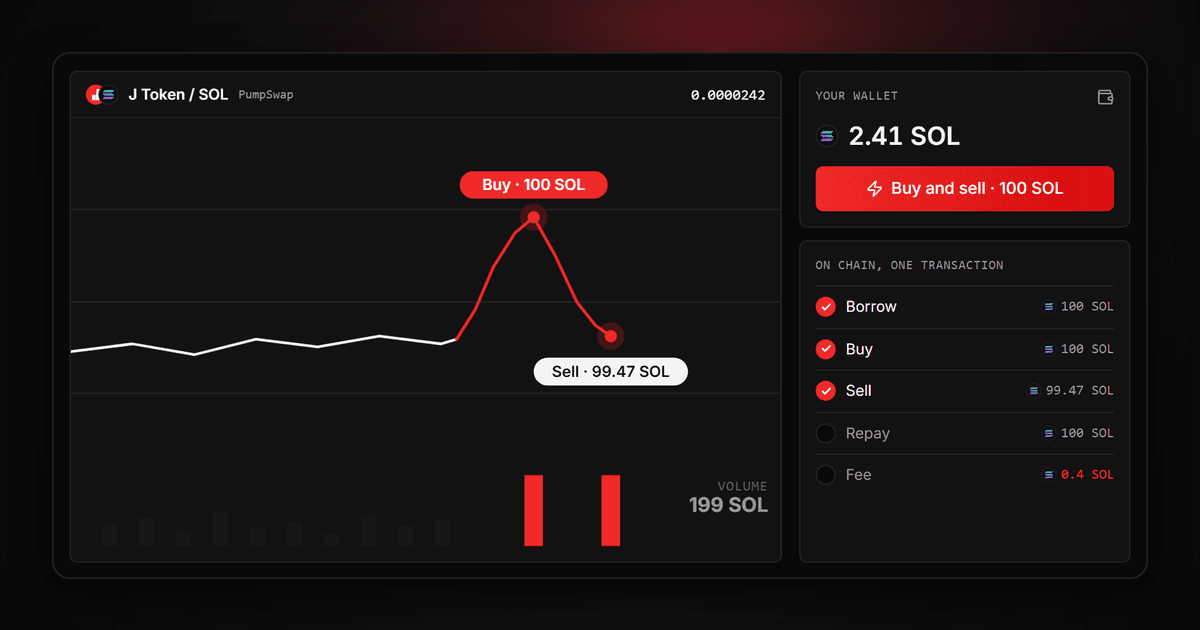
When a Pump.fun token crosses the graduation threshold (how the bonding curve gets there), the protocol burns the LP automatically. The team doesn't choose, the contract just does it. As of March 2025 graduations default to PumpSwap, and the same burn behavior applies there. Asking a Pump.fun graduate "did you burn your LP?" misses the point because the protocol already answered the question for them.
For a memecoin launching outside Pump.fun, you do the burn manually. An LP create and bundled buy flow that packs pool creation and the LP burn into the same block would close the gap, but ours is coming soon and not live yet. For now, burn the LP tokens as soon as the pool is open, so the "pool is live, who pulls first" window stays as short as possible.
The 6-12 month lock playbook
If you've decided to lock, the mechanics come down to a few steps:
- Pick a service (Streamflow or Jupiter Lock). Both produce on-chain records readable on Solscan.
- Align the release date with a milestone: mainnet launch, V2 release, or a token unlock cliff. A random date weakens the trust signal.
- Once the lock is created, paste the Solscan link into the launch announcement body, the docs page, and the pinned tweet.
- Write an unlock policy: "When the lock expires, the team announces direction 30 days in advance (re-lock, migration, or withdrawal)." Publishing the policy ahead of time dramatically reduces panic selling at the unlock date.
The multisig hold playbook
Holding takes ongoing work because it requires continuity:
- Set up a 2-of-3 or 3-of-5 Squads multisig and give it a readable label like "LP Treasury".
- Publish who the signers are (founder, advisor, team member) in the places where it counts: docs, pinned tweet, launch thread.
- Run a quarterly attestation: "LP is still in the multisig, no withdrawals this quarter." The attestation has to be regular to count. Post it once and forget it and you invert the signal.
- For holders who want to verify the LP state themselves, share the token snapshot and holder export tool so they can read the balances on-chain directly.
The five mistakes we see most often
- Burning LP on day one for a utility token in active development. Wins trust upfront, then locks the team out of a DEX migration six months later when the project actually needs one.
- "1 month lock" theater. Everyone sees through it, the signal value dips below zero. Lock for 6+ months or skip it.
- Holding LP in a single hot wallet. Key leak equals empty pool, full stop.
- Conflating LP burn with mint authority revocation. These are independent operations, and burning tokens vs revoking the mint authority separates the two. Making the token itself fully immutable goes through the make token immutable path separately.
- Planning a "second LP burn" for a Pump.fun graduate. The protocol already burned it, there is nothing left to burn.
None of these three paths is universally correct. The right call for a memecoin is the wrong call for an RWA token. Before you decide, weigh the project type, the roadmap, and the realistic odds you'll need to touch the liquidity at all in the next six months. Whichever path you pick, document the decision in the launch announcement body: which path, why, and under what conditions you might revisit it.
An LP burn rushed under community pressure is the kind of mistake you can't roll back. Walk through the mechanics ahead of time with the burn tokens tool flow and the liquidity add and remove panel, then make the call with a cool head. For related operator-side reading, the guides category posts and articles tagged Solana are the next stop.
LP token burn vs lock FAQ
Can a burned LP token ever be recovered?
No. Once the receipt sits at an address nobody holds a key for, nobody can sign it back out, the team included. The liquidity keeps trading and earning fees, but the withdrawal right is gone for good, which is exactly why holders read a burn as the strongest signal a launch can send.
How long should an LP lock last?
At least six months, and twelve is the common choice. A one-month lock reads as theater and can hurt more than it helps. Tie the release date to a real milestone such as a mainnet launch or a V2 release, and publish what the team will do when the lock opens.
Does Pump.fun burn the LP automatically?
Yes. When a Pump.fun token graduates, the protocol burns the LP automatically, and since March 2025 graduations default to PumpSwap, where the same burn applies. A graduate has no LP left to burn, so asking its team for a second burn misses how the launch works.