Where Do LP Fees Go? Pools vs Concentrated Liquidity
Constant-product pools fold LP fees into the reserves; concentrated positions hold them until you collect. Where each Solana venue puts the fee.
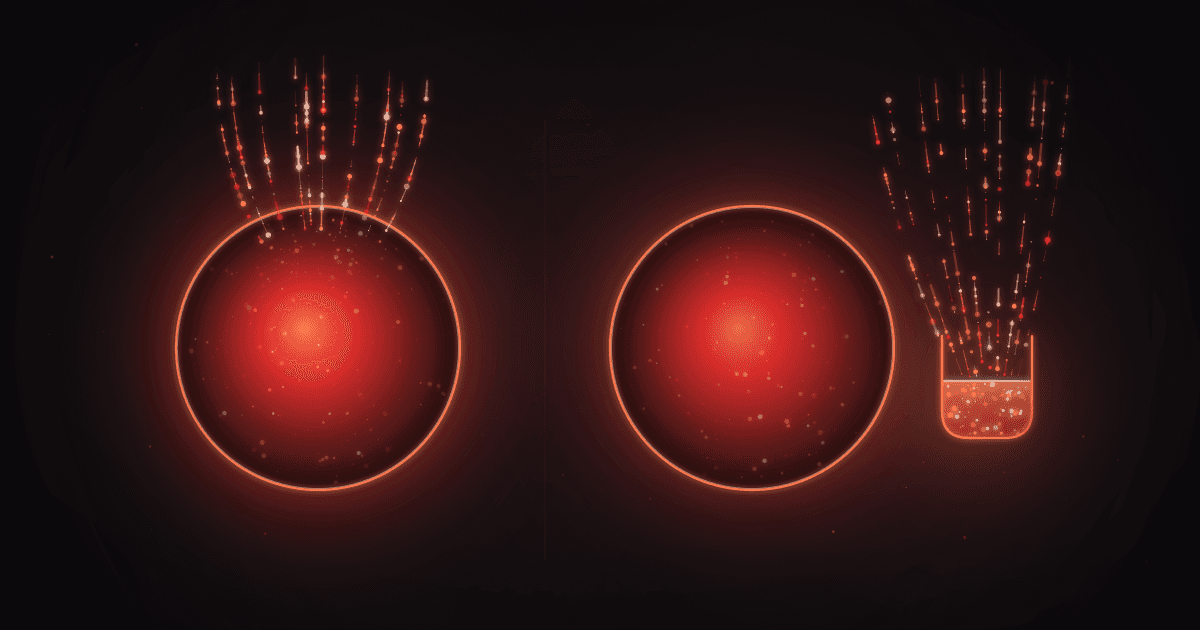
Where do LP fees go after a swap on Solana? It depends on the pool. In a constant-product pool (Raydium AMM v4 and CPMM, PumpSwap) the fee is added to the reserves and comes back to you when you withdraw. In a concentrated or position-based pool (Raydium CLMM, Orca Whirlpools, Meteora DLMM and DAMM v2) the fee is written to your position and waits there until you collect it.
People who search "where do LP fees go" are usually looking at one of two screens: a Raydium standard pool with no fee balance anywhere, or a CLMM position with a small balance growing in two tokens. Both are working as designed.
Where do LP fees go in a constant-product pool
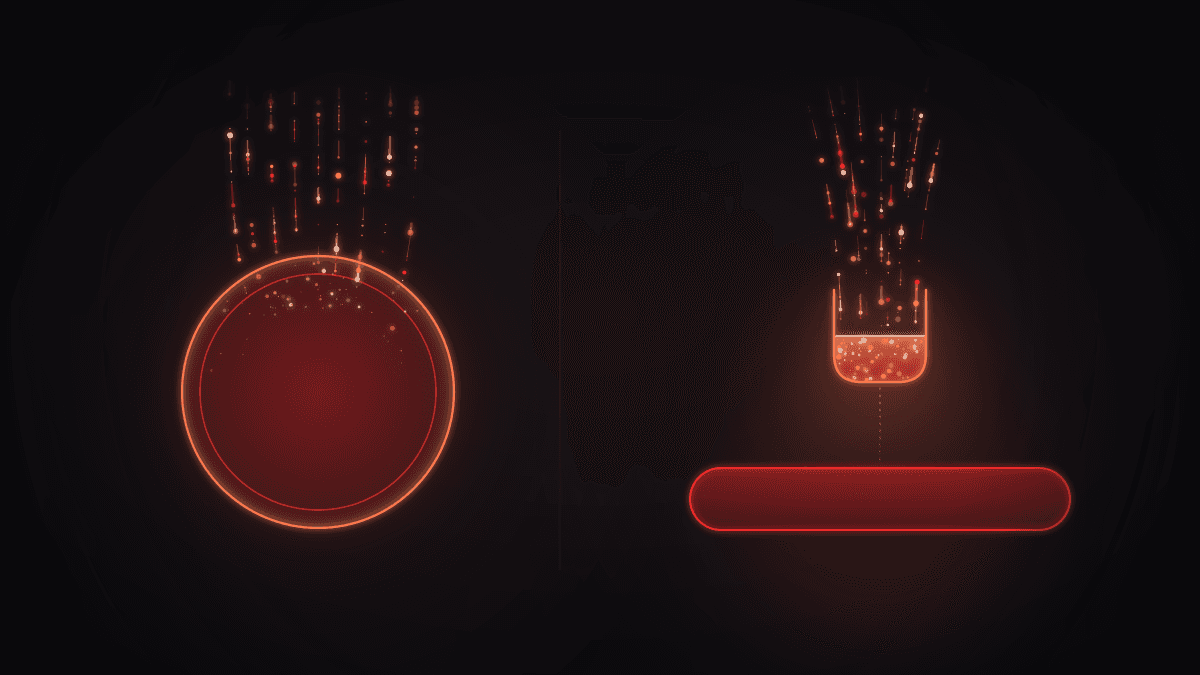
A constant-product pool holds two token vaults and prices every swap from their balances. Each trade pays a fee, and the liquidity providers' part of it is simply left in the vaults. Nothing records it against your wallet. The fee grows the reserves while the LP token supply stays the same, so every LP token becomes a claim on a slightly bigger pool.
That is why there is no fee balance to collect. Raydium's CPMM fee reference says it plainly: LP fees do not accrue to a counter, and you exercise them by burning LP tokens through a withdrawal. AMM v4 works the same way. PumpSwap charges fees on buys and sells only, never on deposits or withdrawals, and its LP portion also stays in the pool vault.
You realise the fees by removing liquidity, on the venue itself or with Liquidity Add / Remove. What comes back is your share of the reserves at that moment, fees included, in whatever mix of the two tokens the price dictates. Our explainer on what PumpSwap is covers that venue in more depth, and opening a Raydium V4 liquidity pool shows where LP tokens come from.
Where do LP fees go in a concentrated position
Here the program does the opposite. When a swap uses your liquidity, your part of the fee goes to counters on your position, kept apart from the liquidity. Raydium CLMM and Orca Whirlpool positions are NFTs with a fee-owed field for each token. A Meteora DLMM position is an account tracking pending fees for both tokens across its bins, and a DAMM v2 position NFT carries its own pending fees.
Those fees stay put until the owner collects them. Meteora's page on how DLMM positions track fees is blunt: fees do not auto-compound into liquidity. Raydium CLMM collects through a liquidity decrease of zero, and Orca calls the same step a harvest.
Fees usually arrive in both tokens. On Orca, and by default on Raydium CLMM and Meteora DLMM, each swap pays its fee in the token it sends in, and trades run both ways. Some pools are set up to collect in one token only: Raydium CLMM, DLMM and DAMM v2 each have such a mode. DAMM v2 also differs in two ways. Its price range is set for the whole pool rather than per position, and its compounding mode sends a configurable share of the LP fee back into the reserves.
| Venue | How liquidity is held | Where the LP fee sits | How you get it |
|---|---|---|---|
| Raydium AMM v4, CPMM | LP tokens | Pool reserves | Remove liquidity |
| PumpSwap | LP tokens | Pool reserves | Remove liquidity |
| Raydium CLMM | Position NFT, own range | On the position | Collect |
| Orca Whirlpools | Position NFT, own range | On the position | Harvest or close |
| Meteora DLMM | Position account, bin range | On the position | Claim |
| Meteora DAMM v2 | Position NFT, pool-wide range | On the position (compounding pools: partly reserves) | Claim |
Part of every swap fee goes elsewhere
Part of the answer to "where do LP fees go" is that some of the fee never reaches LPs. Each venue routes a share elsewhere, and its official docs name the recipient:
- Raydium AMM v4 keeps a protocol share. CPMM and CLMM split the trade fee between LPs, the protocol and a fund, and a CPMM pool can add a separate creator fee.
- Orca sends part of each Whirlpool fee to its Protocol Treasury and a Climate Fund.
- Meteora DLMM keeps a protocol share, and DAMM v2 takes a protocol fee that can include a referral cut.
- PumpSwap charges an LP fee, a protocol fee and a coin creator fee as separate lines, tiered by market cap on pools of Pump.fun coins.
No rates appear here on purpose. They are set per pool or config, some can be changed by the protocol, and the only reliable figure is the one you read from your pool.
Out of range means no new fees
A concentrated position earns only while the pool price sits inside its range. Raydium CLMM, Orca Whirlpools and Meteora DLMM document the same rule: once the price leaves your range, the position stops earning until the price returns or you move the range. Fees earned before that stay on the position and can still be collected.
That is the trade concentration asks for. A narrow range earns more per unit of capital while the price stays inside, and nothing once it walks out. DAMM v2 is the exception: the range belongs to the pool, and a swap that would push the price past its edge fails or fills only up to the boundary.
Fees are only half of the result
A fee balance tells you what trading paid you. It does not tell you whether providing liquidity beat holding the two tokens, because the price move changes the mix you get back. That gap is impermanent loss, and our guide to liquidity pools and impermanent loss works through it with numbers.
Burned and locked LP: what happens to the fees
Burning LP tokens destroys the only claim on that share of the pool. The reserves behind them, and the fees they earn afterwards, stay in the pool for good. PumpSwap's program docs add a detail: the pool keeps counting LP tokens that users burn directly in its supply figure, so the burned share does not pass to the remaining LPs either.
A lock can keep the fees reachable. Raydium's Burn & Earn moves a CPMM LP position or a CLMM position into a program-owned escrow for good and mints a Fee Key NFT, and whoever holds it can collect that position's fees. AMM v4 is not supported, and Raydium advises locking only full-range CLMM positions, since a locked position can never be moved and earns nothing while the price sits outside its range. Meteora DAMM v2 supports vesting and permanent locks, and locked liquidity keeps earning claimable fees.
Fee Key positions are collected through Raydium's interface; LP Fee Claim does not list them yet. For the launch decision itself, LP token burn vs lock vs hold compares the options.
Dust: when collecting costs more than the fee
Collecting is a transaction, and its costs do not shrink with the amount: the network fee for each signature, any priority fee, and a refundable rent deposit if your wallet has no token account yet for one of the pool's tokens. A DLMM position spread across many bins can need more than one transaction.
A position whose fees are worth less than that is dust. Leave it. Pending fees do not expire, and exiting the position later is a natural moment to take them.
Fold small collections into work you were doing anyway. Closing an Orca position collects what it owes in the same transaction, and removing liquidity from a Raydium CLMM position sweeps its fees too.
Collecting across venues with LP Fee Claim and Claim Center
LP Fee Claim reads your wallet's positions on Raydium CLMM, Meteora DLMM and DAMM v2, and Orca Whirlpools. It shows the unclaimed amount in both tokens and where the price sits against each range, then builds the collect transactions for the positions you pick. Your wallet signs each one. Dust is marked and left unselected, and constant-product pools get no claim, since there is nothing separate to take.
The service fee is a share of the claimed value, paid in SOL inside the same transaction, and it is skipped on claims below a small minimum. If your wallets are owed more than LP fees, Claim Center scans for LP fees, creator fees and Token-2022 transfer tax in one pass. To open a new pool instead, start in Create LP.
This article explains how protocols route trading fees. It is not financial, tax or legal advice. Fee rates and pool settings change, so check the pool itself before you commit liquidity, and never provide more than you can afford to lose.
Frequently asked questions
Is there anything to collect from a Raydium CPMM or PumpSwap pool?
No separate balance exists. The LP share of each fee stays in the reserves and comes back as part of your withdrawal. Unless the LP sits in Raydium's Burn & Earn lock, removing some liquidity is the only way to get those fees into your wallet.
Where do LP fees go when the LP tokens are burned?
They stay in the pool. Burned tokens can never be redeemed, so the reserves behind them, fees included, remain for as long as the pool exists. On PumpSwap the pool's supply figure keeps counting directly burned tokens, so other LPs do not inherit that share.
Do I lose earned fees when my position goes out of range?
No. Fees already earned stay on the position and can be collected at any time. Going out of range only stops new fees until the price returns or you rebalance.
Why are my fees paid in two different tokens?
By default, Orca, Raydium CLMM and Meteora DLMM take each swap's fee in the token the trader sends in. Trades run in both directions, so fees build up on both sides. Pools set to a single-token fee mode pay in one token.
Do uncollected fees compound?
In a constant-product pool they effectively do, because they sit in the reserves your LP tokens represent. In CLMM, Whirlpool and DLMM positions they wait as a separate balance and earn nothing until you put them back to work. DAMM v2 compounding pools reinvest a configurable share automatically.